




What is innovative design? It's not just about "making something new"!
Many people think innovation is synonymous with invention, but if no one wants the invention or it doesn't sell, then the idea is nothing more than a work of art. The real challenge lies in transforming creativity from a mere "idea" into something that can "survive."
The value of innovative design lies in its ability to transform an idea into a product that the market will buy, that people are willing to pay for, and that can survive long-term. Profit System。
Innovation has no standard answers, but it follows four fundamental approaches. Understand these models and find the direction that suits you best.
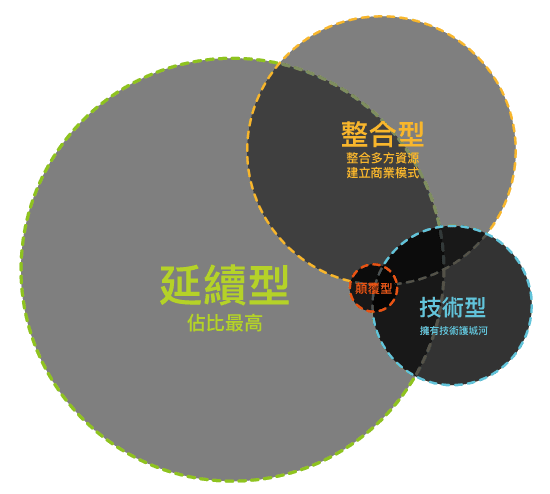
Figure: Schematic Diagram of the Innovative 3+1 Model
Innovative 3+1 Model
1. Tech-Savvy Players: Crush opponents with cutting-edge tech!
These players are like Iron Man in The Avengers—they change the game entirely with their dazzling, cutting-edge skills.
- **Features:** Burn through cash and tax your brain, but once successful, it can completely reshuffle the entire industry.
- **Representative:** Tesla isn't just about electric vehicles; it integrates battery technology, energy systems, and software control to completely disrupt the traditional automotive market.
This innovation isUse technology to open up new battlefieldsrather than competing in the old market, its value stems from its impact on the industry.Fundamental transformation。
2. Continuation Players: Bringing fresh twists to old favorites!
These players are pragmatic, seeking not earth-shattering breakthroughs but steady improvements upon existing products or services. Innovation is often an "invisible change."
Special FeaturesOn the surface, there may not be any major changes, but behind the scenes, continuous improvements are being made to enhance the usability of the product.
representativeSmartphone chip upgrades and minor app interface tweaks may be subtle, yet they steadily enhance the user experience. This "evolution behind the scenes" embodies the essence of incremental innovation.
It's not about disruption, but steadily adding value to familiar products to make services more closely aligned with user needs.
3. The Integrationist: Throwing together things that have absolutely nothing to do with each other!
Imagine combining "online ordering" with "delivery services"—the result is Uber Eats.
Special FeaturesLike a creative chef, blending different ingredients (technology, service) to serve up an unprecedented "new dish."
representativeFood delivery platforms and smartwatches (combining health monitoring and communication functions) are classic examples of integrated innovation.
Integrated innovation emphasizes cross-domain combinations, often creating new needs in unexpected areas for users.
+1. Disruptive Players: Change the world the moment they step onto the stage!
Want to shake up the market? These players don't rely on evolution—they rely on...Smash the old rules to pieces。
Special FeaturesFast-paced and disruptive, they often reshape the way people live and work.
representativeChatGPT is the prime example. AI technology has existed for years, but through "human-like interfaces" and "large-scale training," AI has moved from research labs into everyday life, fundamentally transforming how we write reports, learn, and even think.
Such innovation is not merely about adding new features; it is about creating an entirely new industrial chain and value system.
Summary
Innovative design isn't just a flash of genius—it's a combination of different strategies. Understanding these distinct innovation pathways helps you move beyond blindly chasing so-called "inventions" and instead think more strategically about how to transform an idea into a truly valuable business model.
- Technology-driven → Breaking into the market through technological innovation.
- Continuous improvement → Ongoing optimization of familiar products.
- Integrated → Cross-domain integration creates new value.
- Disruptive → Rapid evolution, disrupting market rules.